Oversized frame
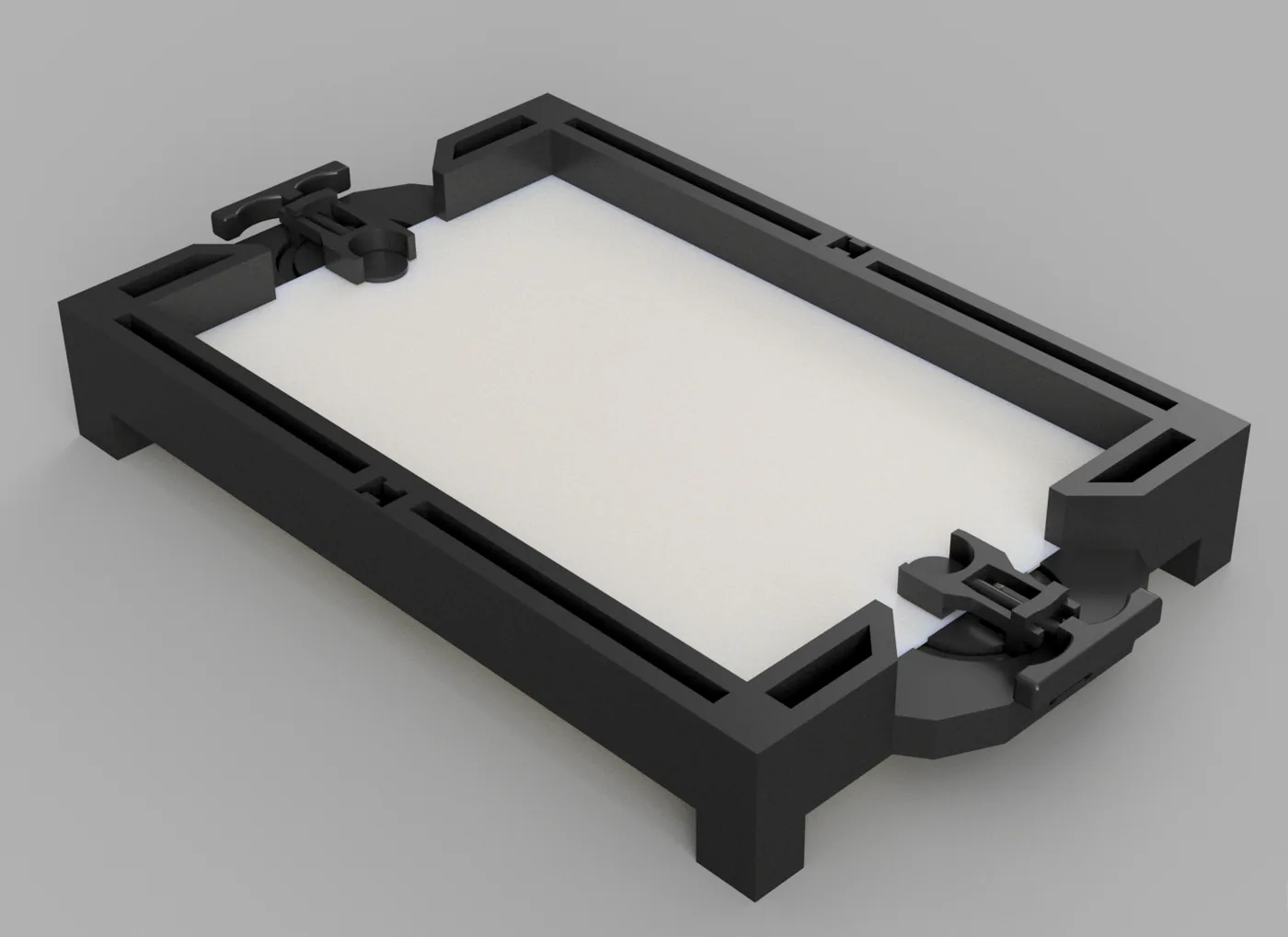
The 340 mm frame exceeded the printer bed.
ResponseRe-architected the walls as four mirrored modules assembled around the playing surface.
01 · Mechanical product system
A physical tabletop game engineered through repeated CAD, printing, assembly and gameplay tests.

Frame · Adjustable launchers · Weighted stones · Replaceable playing surface
01 / Project overview
The team translated a compelling digital toy-curling experience into a repeatable tabletop game for the school community. The final build coordinates a modular frame, adjustable spring launcher, weighted stones and an acrylic playing surface.
02 / Design challenge
The build had to remain printable on a limited bed, keep the stone centred while the player changed aim, survive repeated use and provide predictable interfaces between printed parts and acrylic.
The 340 mm frame exceeded the printer bed.
ResponseRe-architected the walls as four mirrored modules assembled around the playing surface.
Early aiming geometry moved the stone and loaded a weak pivot.
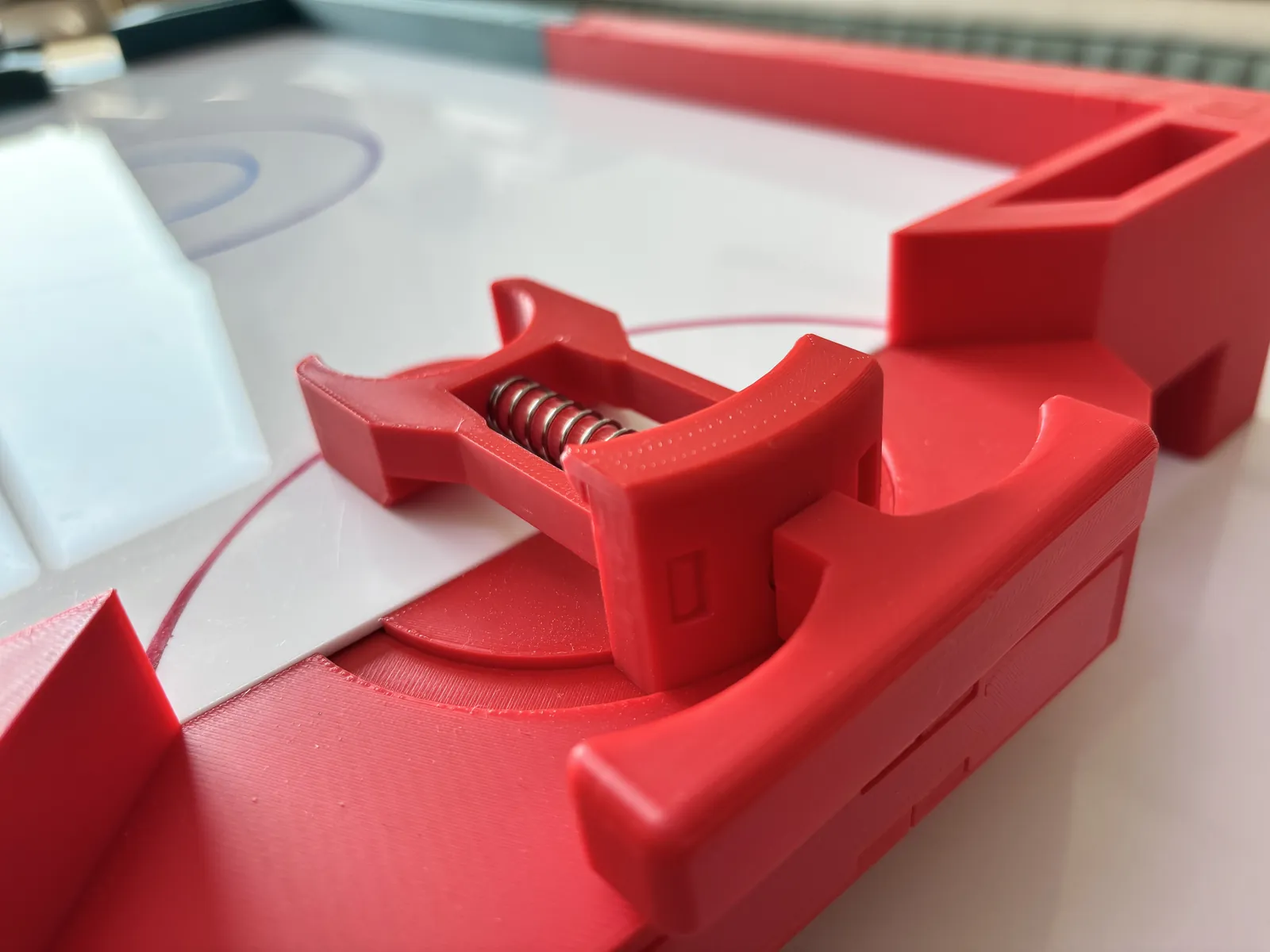
ResponseDeveloped a captured donut mechanism centred on the stone to preserve alignment.
Supports inside the acrylic slot damaged a critical interface.
ResponseChanged the wall cross-section for support-free printing and easier replacement.
A 0.2 mm CAD gap produced loose printed interfaces.
ResponseRetuned each fit from physical evidence and increased guidance surfaces.
03 / Engineering approach
Yiming recreated the acrylic board in Fusion 360, developed the frame and launcher geometry, divided large parts for fabrication and used small print tests to resolve overhang, strength, ballast and tolerance decisions before committing to final components.
Define the intended school setting, play sequence and essential product interfaces.
Modularise the frame and preserve the stone’s launch centre while changing aim.
Expose weak cylinders, excess friction, wobble and inaccurate clearances.
Strengthen guidance, replace weak geometry and tune printed interfaces.
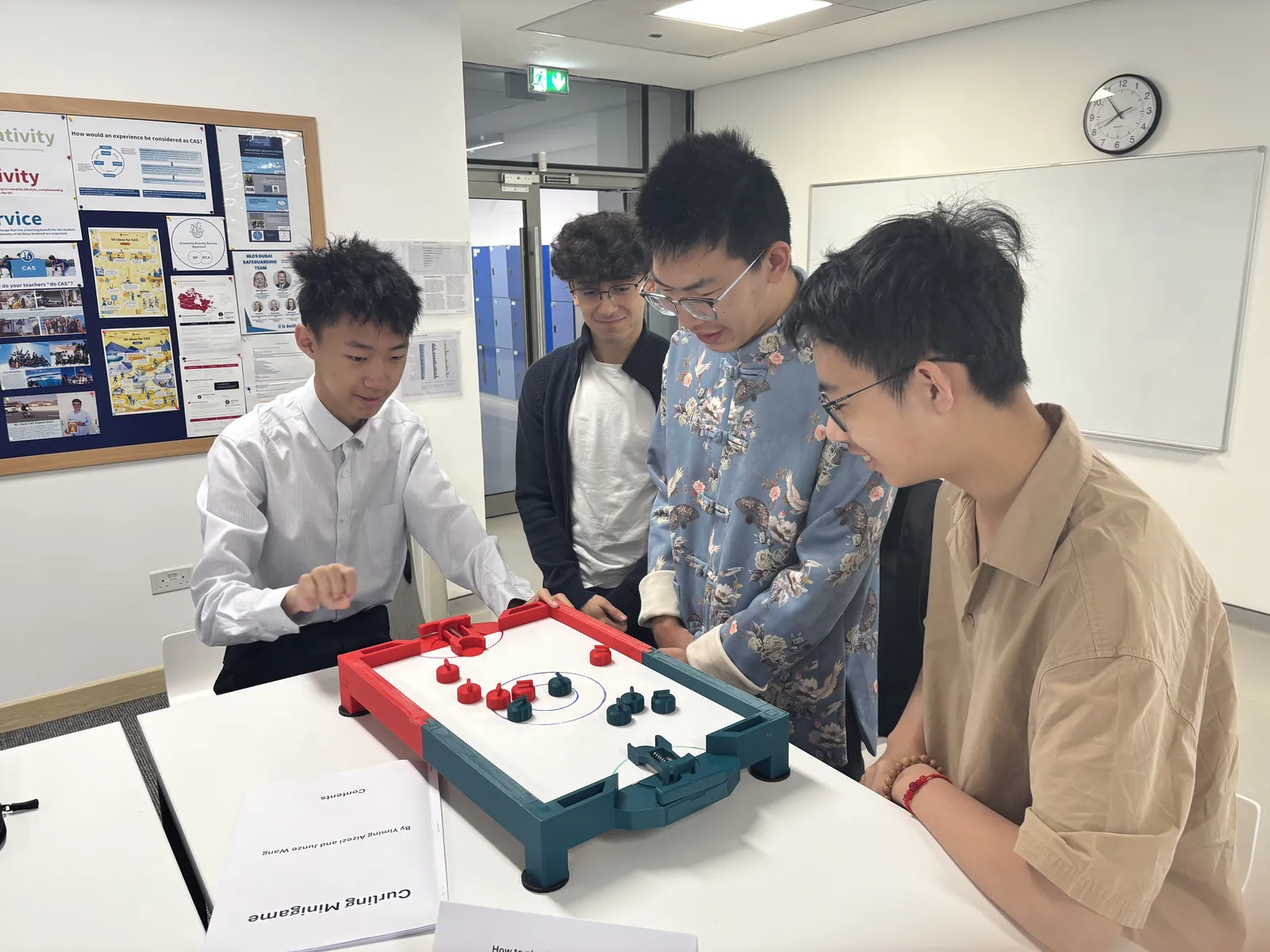
Complete the two-player system, publish rules and test it with the community.
Prototype development
Testing & iteration
Test pieces revealed purge-line conflicts, friction, wobble, weak pivots and fit errors that were not obvious in CAD. Each failure became a specific geometry change.
Documented contributions
Concept selection, launcher brainstorming, testing, rules and school deployment were completed with Junze Wang. Individual claims above are limited to tasks explicitly recorded in the shared engineering log.
06 / Outcome
The outcome is a complete two-sided tabletop system and a traceable engineering record from early concepts to community use.